2026 East Asia Influencer Marketing Playbook
Mar 10, 2026
Blog
Influencer Marketing



Blog
E-commerce & D2C
Sep 25, 2025
In recent years, the growth of e-commerce in Indonesia has been accelerating rapidly. According to the latest report from Statista, the value of Indonesia’s e-commerce market is projected to continue growing until 2025, reaching tens of billions of US dollars. This makes Indonesia one of the largest digital markets in Southeast Asia. Such growth certainly creates major opportunities for brands and businesses, both small and large.
However, behind this great opportunity lies a common challenge for many brands: managing multiple marketplaces at once. Today, brands don’t just sell on a single platform, but across multiple e-commerce marketplaces. Each has different rules, reporting formats, promotional systems, and unique consumer behavior. This creates a significant challenge for brands to ensure smooth operations—keeping inventory, pricing, and orders synchronized across all platforms.
Running a business across multiple marketplaces is not as simple as opening an online store and waiting for orders. There are several major challenges brands often face:
One of the biggest issues is stock discrepancies between marketplaces. For example, a product may be sold out on Shopee but still appear available on Tokopedia. This can create a poor customer experience when the order ends up being canceled.
Each marketplace has its own “rules of the game.” Shopee might emphasize competitive pricing, while TikTok Shop focuses on interactive video content. Brands must adjust their promotional strategies on each channel, which requires significant time and resources.
According to a McKinsey report on Southeast Asia’s e-commerce, fragmented sales data often makes it difficult for brands to analyze overall performance. As a result, many strategic business opportunities are missed.
Efficiency isn’t just about working faster—it’s about working smarter. By being efficient, brands can:
It’s no surprise that many brands are now seeking ways to consolidate multi-marketplace management into one single platform.
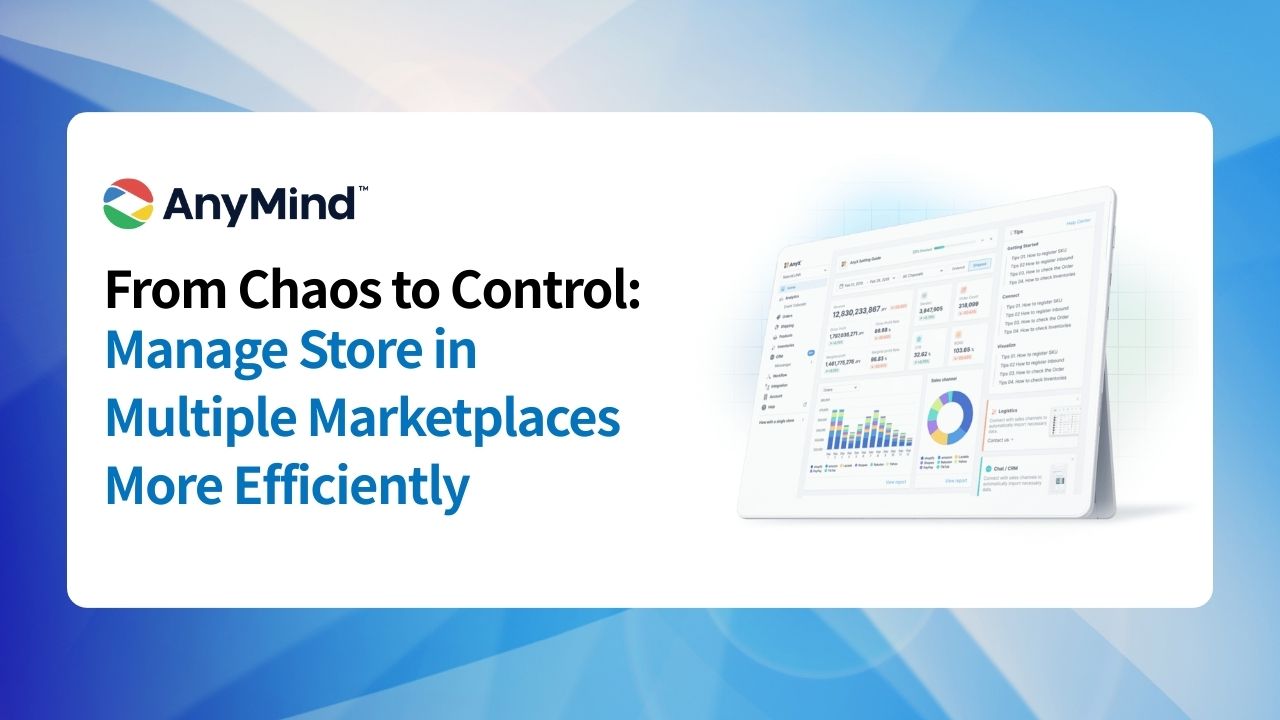
One solution that addresses these challenges is AnyX, an e-commerce enablement platform developed by AnyMind Group. AnyX functions as a central dashboard that connects various marketplaces into one integrated system. Through a single dashboard, brands can:
With these features, brands not only save time but also enable more accurate, data-driven business strategies.
The use of AnyX has already helped several global brands optimize their operations across Asia. For example, an FMCG brand that previously spent more than 5 hours a day just to compile sales reports from different marketplaces now only takes a few minutes, thanks to the automated system in AnyX.
As a result, their teams now have more time to focus on marketing strategies and product innovation instead of being bogged down by administrative work.
Looking at shopping trends in Indonesia, it’s clear that consumers don’t shop exclusively on a single marketplace. They compare prices, hunt for promotions, and choose based on the shopping experience they prefer.
Therefore, for brands, being present across multiple marketplaces is no longer optional—it’s a necessity. The challenge, of course, is ensuring that all these channels are managed efficiently.
AnyX offers the solution to this need, supported by AI-powered Business Intelligence that helps brands analyze performance across every store they operate.
Managing multiple marketplaces may be full of challenges, but it doesn’t have to be complicated. With the right approach and the right technology, brands can make the process simpler, more efficient, and more profitable.
AnyX is here to help brands turn challenges into opportunities, with smarter and more integrated ways of working.
If you want to learn more about how AnyX can support your business, visit AnyMind Group for more information or download our latest report to get more insights!